Forensic Discovery
Home > eDiscovery Services for Law Firms and Businesses

eDiscovery services from source to production

Forensic Discovery provides eDiscovery services for law firms and businesses that need to preserve, collect, organize, review and produce electronically stored information (ESI). We help connect the technical work across those stages so counsel can make informed decisions about scope, review and delivery.

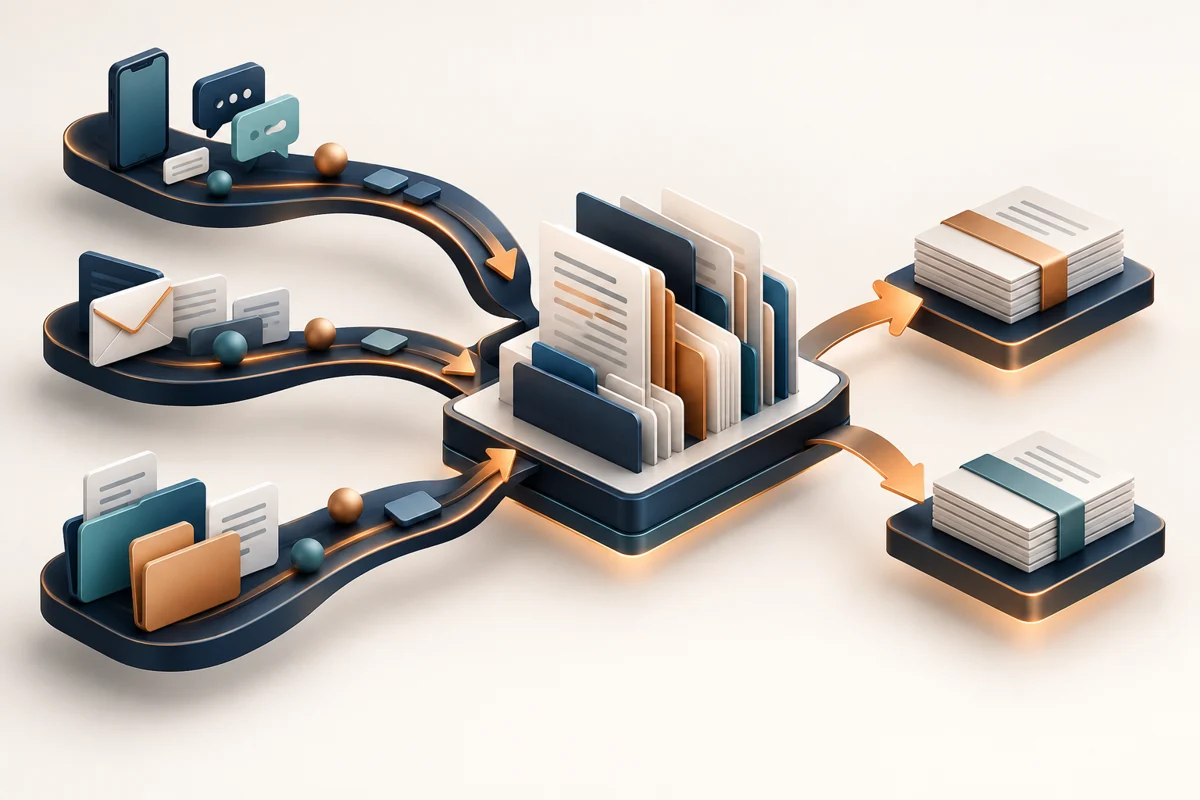
Conceptual illustration of digital sources feeding an organized review workspace and output groups.

A matter may begin with a discovery request, a collection already in progress or a production received from another party. We identify what has been done, what remains available and what the next stage requires. Our digital forensics services address investigative questions that need examination beyond document review.

The starting point is the matter’s sources, authority, deadlines and intended output. Counsel directs legal obligations, relevance, privilege and production decisions; our team supports the technical plan and documents its limitations.

Schedule a Free Consultation

eDiscovery services we provide

Processing and early case assessment

We prepare collected or received material for review, using agreed processing and culling settings. Available outputs can include metadata, searchable text, duplicate handling and exception reports. Assessment and hosted review connects early case assessment with a documented review population.

Hosted document review for counsel

We help organize a review workspace around the matter’s users, searches and coding decisions. Counsel determines the review approach and supervises legal judgments. See hosted review services for review operations, features that depend on the platform and export planning.

AI-assisted and technology-assisted review

Analytics, technology-assisted review and generative AI perform different tasks. Their suitability depends on the documents, licensed features, configuration and validation plan. AI-assisted hosted review explains how human oversight and documented checks fit the workflow.

Production and privilege support

We help prepare production sets approved by counsel with agreed numbering, redactions, metadata and load files where supported. Technical checks address the selected output; counsel decides what may be produced or withheld. Privilege log support depends on the review decisions and fields supplied for the matter.

eDiscovery consulting and ESI protocols

We translate source and format requirements into a technical plan: data mapping, search testing, cost projections, workflow training and production specifications. We can supply technical information for counsel’s ESI protocol discussions. Legal negotiation, preservation duties and the adequacy of an agreement remain counsel’s responsibility.

Discuss the stages your matter needs

When to bring in an eDiscovery provider

A discovery request needs a workable technical plan

Custodians, date ranges, search terms and output formats need to work together. We help test assumptions before they become collection or production problems. For an ESI protocol or meet and confer, counsel can use technical findings about available sources, search results and export constraints when evaluating proposed terms.

A hold reaches many custodians and sources

Email alone may miss relevant files, texts and collaboration records. A source map connects custodians with business systems, retention settings and access requirements. Preservation and collection planning helps document the agreed scope, acquisition priorities and sources that cannot be reached.

The review population exceeds the team’s capacity

A large incoming production or approaching deadline can expose gaps in staffing, search design or processing. Assessment and hosted review supports an organized review population; AI-assisted review may help prioritize work when suitable features and validation are available. Neither replaces counsel’s review decisions.

Start with the information your business uses

Availability depends on retention, permissions, encryption and the source’s export options. A source name alone does not establish that all its contents can be acquired or reviewed in the same form.

SourcePotential materialTechnical handoff
Email systemsMessages, attachments and available metadataCollection scope, then processing and review
Computers, servers and file sharesDocuments, spreadsheets and folder contextTargeted collection or examination, then review
Mobile devices and text messagesSupported messages, media and available attachmentsCollection that depends on the source, plus review of short messages
Cloud storageAccessible files, versions and available sharing contextAuthorized acquisition and format checks
Slack, Microsoft Teams and other collaboration sourcesAvailable conversations, participants and linked contentExport review and attachment reconciliation
Social media, web content, audio and videoAvailable posts, captures and media filesSource and format assessment before review

Related sources and services

For needs involving a particular source, see forensically sound email collection, mobile device forensics and cloud-based forensics.

Planning guide: Our guide to what your business should collect for eDiscovery offers a starting point for the source discussion.

How an engagement moves from scope to production

The Electronic Discovery Reference Model (EDRM) offers a reference for the discovery lifecycle. A matter can enter at different stages and return to earlier decisions as new information appears.

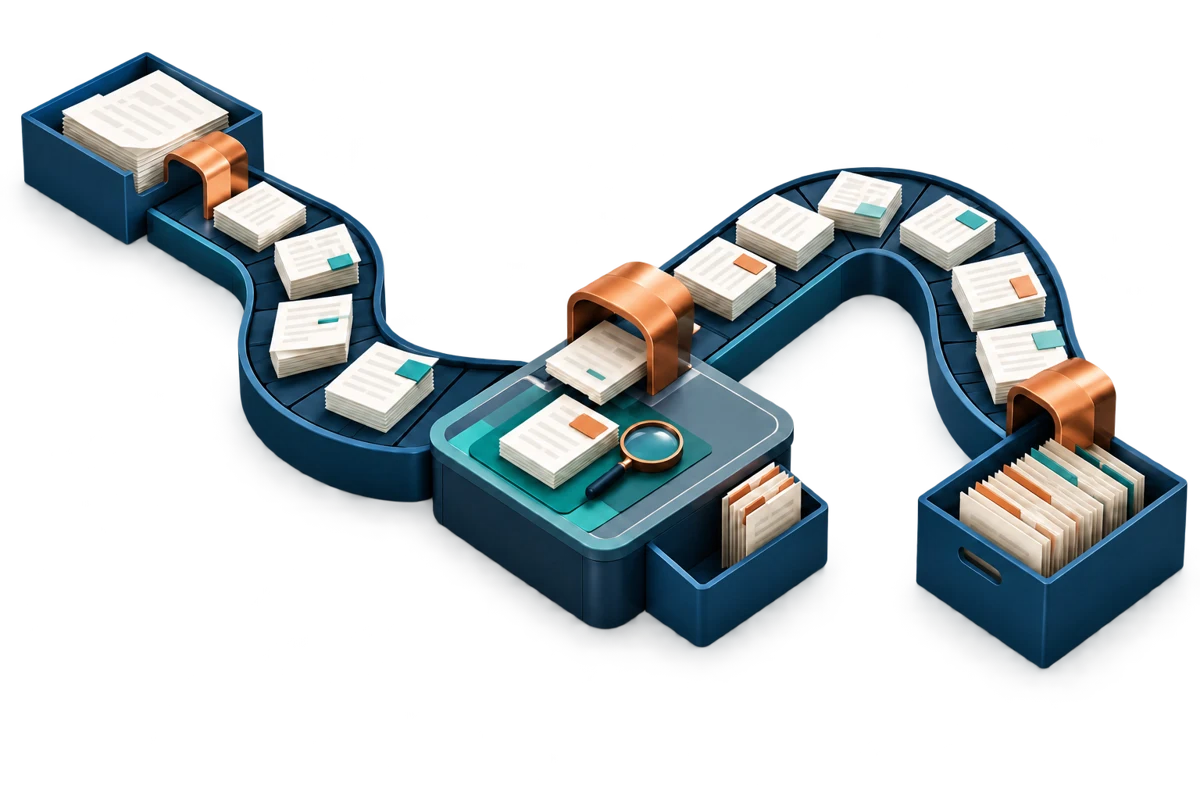
Conceptual illustration of document groups moving through a review workbench to an output tray.
  1. Scope the matter and map the sources.
    Identify custodians, authority, deadlines, existing collections, expected outputs and technical constraints with counsel and the business team.
  2. Coordinate hold and preservation work.
    Counsel sets legal scope; the technical team records agreed actions, exceptions and chain of custody as applicable.
  3. Collect available material.
    Use an agreed onsite or remote approach where supported. Collection planning includes transfer records and hash checks where appropriate; hashes alone do not establish completeness or authenticity.
  4. Process and assess.
    Apply agreed settings, report exceptions and test the proposed review population through early case assessment before expanding review.
  5. Review under counsel’s direction.
    Set user roles and review instructions, then assess whether AI-assisted review is appropriate and how results will be checked.
  6. Prepare and check the output.
    Produce the approved set in the agreed format, document exceptions and retain the records needed to explain the technical work.

Outputs that explain the work

Depending on scope, deliverables may include a source inventory, collection and processing records, data prepared for review, exception lists, productions approved by counsel and technical declarations. Agree on native files, images, text, metadata and load files before delivery. Our expert witness and testimony services address reports, declarations, depositions and trial testimony. The court determines admissibility; the judge or jury, as applicable, evaluates weight.

Keep source context through each technical handoff

Forensic Discovery connects collection, processing and review planning with digital forensics and eDiscovery. When a review raises a question about a document or its source, the next step can be scoped without treating a review tag as a forensic conclusion.

Information to carry into the next stage

Use this record to identify what the next team needs to understand.

Source context
Identify what was collected and what remains outside scope.
Documented choices
Record processing settings, exceptions and approved changes.
Clear responsibilities
Distinguish technical work from counsel’s legal decisions.

Which stage is complete, and what does the next team need?

Discuss the next technical handoff

Who we work with

We work with outside counsel, litigation support staff, internal legal teams and businesses, coordinating with IT, HR and compliance where relevant. Forensic Discovery works with law firms and businesses only and does not accept direct individual consumer matters. If a law firm represents the individual, the firm may contact Forensic Discovery about the matter. See our offices and service locations.

Scope and pricing before work begins

Cost depends on custodians and sources, data volume before and after culling, processing exceptions, hosting duration, users, review model, production requirements and deadlines. Ask for the proposed scope, deliverables, assumptions and pricing in writing before authorizing work. A staged estimate can separate collection, processing, hosting and production so changes to one stage are visible. Access, security and export requirements should be checked before choosing a workflow.

Conceptual scoping workbench with organized folders, document groups and a blank calendar.

Frequently asked questions about eDiscovery services

What eDiscovery services does Forensic Discovery provide?

We support source planning, preservation, collection, processing, review operations and production. An engagement can cover the stages your matter needs. Start with preservation and collection, assessment and hosted review, or AI-assisted review. The engagement plan identifies responsibilities and limitations; counsel retains responsibility for legal decisions about preservation obligations, responsiveness, privilege and what is produced. Existing collections and incoming productions can also be assessed.

What does technical forensic eDiscovery mean?

It connects discovery workflow decisions with the methods used to acquire and examine digital information. That can include source identification, chain of custody, collection records and documented processing choices. Forensic work may help explain a disputed source or document, but it does not make every record authentic or every process defensible by definition. The available data, agreed scope and methods still need examination.

When should a law firm bring in an eDiscovery provider?

Consider technical support when a matter involves many custodians, unfamiliar sources, substantial review volume, disputed collection methods or production formats the team cannot readily generate. An early discussion can identify requirements before counsel commits to a protocol or delivery date. Your team may retain document review while engaging us for collection or processing. The division of work should be explicit so source gaps and review responsibilities remain visible.

How much do eDiscovery services cost?

The main variables are source access, collection method, processing volume and exceptions, hosting duration, review support and production specifications. Initial data size does not by itself predict the volume retained for review or the cost of handling unusual files. Ask for the proposed scope, deliverables, assumptions and pricing in writing before authorizing work. Our guide to choosing a hosted review provider can help frame the questions to ask.

How long does collection through production take?

Timing depends on access, source availability, transfer volume, processing exceptions, review resources and the requested output. A collection deadline and a production deadline are different milestones. We assess the available time before proposing a sequence and identify dependencies that could delay the next stage. A short deadline may require counsel to prioritize sources or delivery groups; no standard turnaround applies to every matter.

Can you help with an ESI protocol?

We can provide technical input on source availability, custodian and date scope, search term testing, metadata, production formats and review workflow constraints. Counsel negotiates the protocol and evaluates its legal adequacy under the applicable rules and orders. Our article on ESI protocols and early planning explains why those choices merit attention. Agreed technical settings and later changes should be recorded for the matter.

Can you collect and review Slack, Teams and text messages?

We assess the supported collection and review path for the actual source. Retention, account permissions, licensing, device state and export format affect what is available; linked files may require separate acquisition. Data preservation and collection addresses acquisition, while hosted review planning addresses how supported data from short messages will be presented. Identify gaps in material or conversation context rather than assuming the available records are complete.

Can processed data move to our review platform?

Potentially. We first confirm the receiving platform’s specifications, available exports, metadata fields, family relationships and any image or text requirements. A test load can reveal compatibility issues before a larger transfer. Export support does not mean every feature, annotation or conversation view transfers unchanged. Discuss the destination during assessment and hosted review planning so the scope includes the required output and checks.

What is AI-assisted review, and how is it checked?

The term can cover different tools, including analytics, technology-assisted review and generative AI. They should not be treated as interchangeable or assumed to be enabled on every matter. Counsel and the technical team define the task, available features, validation and human review appropriate to the use. Our AI-assisted hosted review service explains the distinctions. No tool guarantees completeness, privilege protection or a legally sufficient review.

Can you testify about collection and production methods?

Our expert witness and testimony services can address the technical work within the examiner’s knowledge and assignment. Scope may include a report, declaration, deposition or trial testimony about methods, records and limitations. Any organizational representative testimony requires a separate, properly defined engagement; it is not interchangeable with expert opinion. Counsel determines the needed role. The court determines qualification and admissibility; the judge or jury, as applicable, evaluates weight.

Discuss your matter’s next technical step

Tell us about the request, the sources involved, any work already completed and your deadline. We will help scope the eDiscovery services needed to move the matter forward. Use the form for a general inquiry and avoid sending evidence or sensitive matter details until an appropriate transfer method is arranged.

Schedule a Free Consultation or call (866) 458-4993.

"*" indicates required fields