 (866) 458-4993

By Forensic Discovery | Digital Forensics & eDiscovery Experts Since 2019
Chain of Custody for Digital Evidence: Best Practices A source-first forensic process can support chain of custody for digital evidence while keeping technical findings separate from legal conclusions.
This article provides general guidance on digital forensics and eDiscovery. It does not provide legal advice. Preservation, discovery, privilege, and admissibility decisions should be made by counsel based on jurisdiction, court orders, and case facts.
Chain of Custody for Digital Evidence: Best Practices For attorneys and litigation teams, the useful starting point is the evidence question counsel needs answered. The examiner should identify the systems, accounts, devices, messages, documents, and logs most likely to show source history before anyone starts browsing, exporting, or cleaning up data.
A source-first review for chain of custody for digital evidence should preserve likely evidence before routine use changes timestamps, sync state, deleted-item retention, account logs, or document history. The goal is to protect the technical record so later findings can be tied back to a known source rather than a loose screenshot or copied file.
Potential sources often include endpoint storage, cloud audit records, email headers, collaboration exports, mobile backups, removable-media traces, browser downloads, document metadata, and account security logs. No single source should be treated as complete when other systems may explain the same event differently.
The best preservation plan records what was collected, what was unavailable, who controlled the source, which tools or exports were used, and which exceptions could affect interpretation. That documentation matters because a later reviewer needs to follow the path from source evidence to finding without relying on unsupported assumptions.
Metadata can connect a file, message, account, or device event to a sequence of activity. It may show creation and modification times, software versions, file paths, sender and recipient fields, routing history, access records, sync events, exports, downloads, or deletion indicators.
Those details need careful handling. Timestamps can reflect copying, exporting, scanning, downloading, timezone settings, cloud behavior, or application updates. A reliable analysis compares artifacts across sources and explains which timestamp was used, where it came from, and what it can and cannot establish.
A useful forensic report does more than list tool output. It should describe the collection method, source condition, file hashes, artifacts reviewed, relevant timestamps, recovered items, limitations, and alternative explanations. It should distinguish originals, copies, exports, screenshots, synced files, and reconstructed artifacts because those categories can carry different evidentiary weight.
Authentication and admissibility are legal questions, but forensic documentation can support counsel’s foundation work. Collection notes, hash values, source descriptions, metadata extracts, and examiner qualifications help counsel evaluate whether a technical record can be explained clearly in negotiation, mediation, expert disclosure, or testimony.
Platform or Source context matters because the same event may appear differently in exports, devices, logs, screenshots, and backups.
For chain of custody for digital evidence, the same fact pattern may appear differently across platforms, devices, accounts, and exports. The matrix below helps counsel separate what a source may show from what it cannot prove on its own.
| Artifact or Source | What It May Show | What It Cannot Prove Alone | Preservation Concern |
|---|---|---|---|
| System artifacts | Data points showing what occurred | Legal conclusions without non-technical evidence | Collect before routine use changes them |
| Log sources | Activity events with timestamps | Complete context across all platforms when they exist | Request exports before retention windows expire |
A common pattern in chain of custody for digital evidence work involves analyzing technical data artifacts after an incident. A defensible preservation would examine system artifacts, cloud logs, metadata patterns, communication trails, and business context. The report would identify technical events that can be proven with available sources and limitations with what cannot be answered reliably from the evidence that survived.
The practical lesson is that collection choices shape the later opinion. When counsel preserves the native source, related device artifacts, account records, and known gaps at the outset, the examiner can write a report that is clearer about timing, authenticity, and limits. When preservation waits until after accounts are changed or devices are reused, the same examiner may only be able to describe partial traces and uncertainty.
Platform records, local device artifacts, and exported review files can disagree because each system stores a different slice of activity. Logs may roll off, screenshots may omit context, exports may normalize times, devices may sync selectively, and cloud services may keep deleted-item records for only a limited period. A reliable analysis explains those caveats and states whether a finding comes from a native source, a derived copy, a user-created exhibit, or a reconstructed artifact.
Before an examiner touches a device or exports an account, counsel and the forensic team should identify likely evidence sources and agree on a collection plan. For chain of custody for digital evidence, the planning phase typically covers endpoint devices, cloud services, email systems, collaboration platforms, messaging applications, removable media, network-attached storage, backup systems, and security logs. Each source type imposes different preservation windows, export capabilities, authentication needs, and chain-of-custody requirements.
The collection plan should document which sources will be preserved, who controls each source, what method will be used for collection, whether the collection will be forensic (bit-stream) or logical (file-level), and which sources are known to be unavailable. Counsel should also decide whether to preserve metadata-only exports, full-disk images, targeted collections, or a combination. The plan should record the rationale for each decision so that later reviewers can understand why certain sources were collected while others were not.
For attorneys and litigation teams, the collection plan also serves as an early risk assessment. If a key device has already been wiped, a cloud retention window has closed, or a messaging platform does not retain exportable message content, the plan should flag those gaps. A defensible collection plan does not promise completeness where it cannot be achieved. It identifies what is available, what is not, and what assumptions underlie the collection scope.
Verification is not a single step performed at the end of collection. It is a recurring control that should be applied when evidence is collected, when it is transferred between storage locations, when a working copy is created, when analysis software processes the data, and when exhibits are prepared for production or testimony. Each verification checkpoint confirms that the data reviewed later is the same data collected earlier.
The primary verification tool in digital forensics is cryptographic hashing. Algorithms such as SHA-256 produce a fixed-length digest that is statistically unique for a given input. If a single bit changes anywhere in the source data, the hash value changes completely. By recording hash values at collection and comparing them at each subsequent stage, the examiner can demonstrate that the evidence has not been altered. This does not prove the evidence is authentic in a legal sense, but it does support the technical claim that the evidence reviewed is the evidence collected.
Verification also extends to the tools and processes used. Examiners should document the software versions, write-blocker models, export methods, and analysis settings applied at each stage. If an export tool normalizes timestamps to UTC, strips some metadata fields, or re-encodes attachments, those transformations should be disclosed so that counsel can assess whether the exported record is a complete and faithful representation of the source.
Applying these principles to chain of custody for digital evidence requires translating the article’s scope into concrete workflow steps. The following practical considerations are drawn from the in-scope terms and talking points, keeping the discussion within the topic boundary and avoiding unrelated legal contexts.
Not every investigation produces a complete record. Devices may have been reset, cloud retention windows may have closed, encryption may block access, logs may have rolled, accounts may have been deleted, and physical media may have failed. When those gaps exist, the forensic report should describe them plainly rather than omitting them or speculating about what the missing data might have shown.
A negative finding;such as the absence of a file, message, login, or transfer;can be significant, but its weight depends on what was preserved. If the examiner reviewed a complete forensic image with full file-system metadata and found no trace of a particular document, that absence may be meaningful. If the examiner reviewed only a partial export, a screenshot folder, or a subset of available accounts, the absence may reflect collection limits rather than true non-existence. Good reporting distinguishes those two situations clearly.
For attorneys and litigation teams, the gap analysis is often as important as the positive findings. When a matter turns on whether an action occurred at a particular time, the absence of corroborating logs, the unavailability of a key device, or the expiration of a retention window may affect how counsel evaluates risk, settlement, or trial strategy. The forensic report should equip counsel with an honest technical assessment rather than a curated narrative that ignores inconvenient gaps.
Forensic documentation becomes most valuable when a matter proceeds to a stage where findings must be explained to a judge, jury, arbitrator, or opposing expert. At that point, the examiner’s contemporaneous notes, hash logs, collection records, chain-of-custody forms, tool output, and written report become the foundation for direct examination, cross-examination, and expert disclosure.
Effective documentation for chain of custody for digital evidence should be understandable to a non-technical reader while remaining precise enough for technical cross-examination. Each finding should be supported by a reference to the specific source, artifact, tool, and method that produced it. If a conclusion depends on an assumption about timezone settings, clock synchronization, export normalization, or software behavior, that assumption should be stated explicitly.
The documentation package should also include materials that counsel may need for discovery or disclosure obligations: the examiner’s qualifications and certifications, the standard operating procedures followed, the tools and versions used, the chain-of-custody records, the hash verification logs, and any peer review or quality-control steps applied. Providing those materials proactively helps counsel respond to challenges without scrambling to reconstruct the technical record months after the examination.
Sources used for technical process framing
A forensic timeline is strongest when it shows both the evidence and the gaps. If a source wasn’t available, a retention period expired, or a file was overwritten, the report should say so plainly.
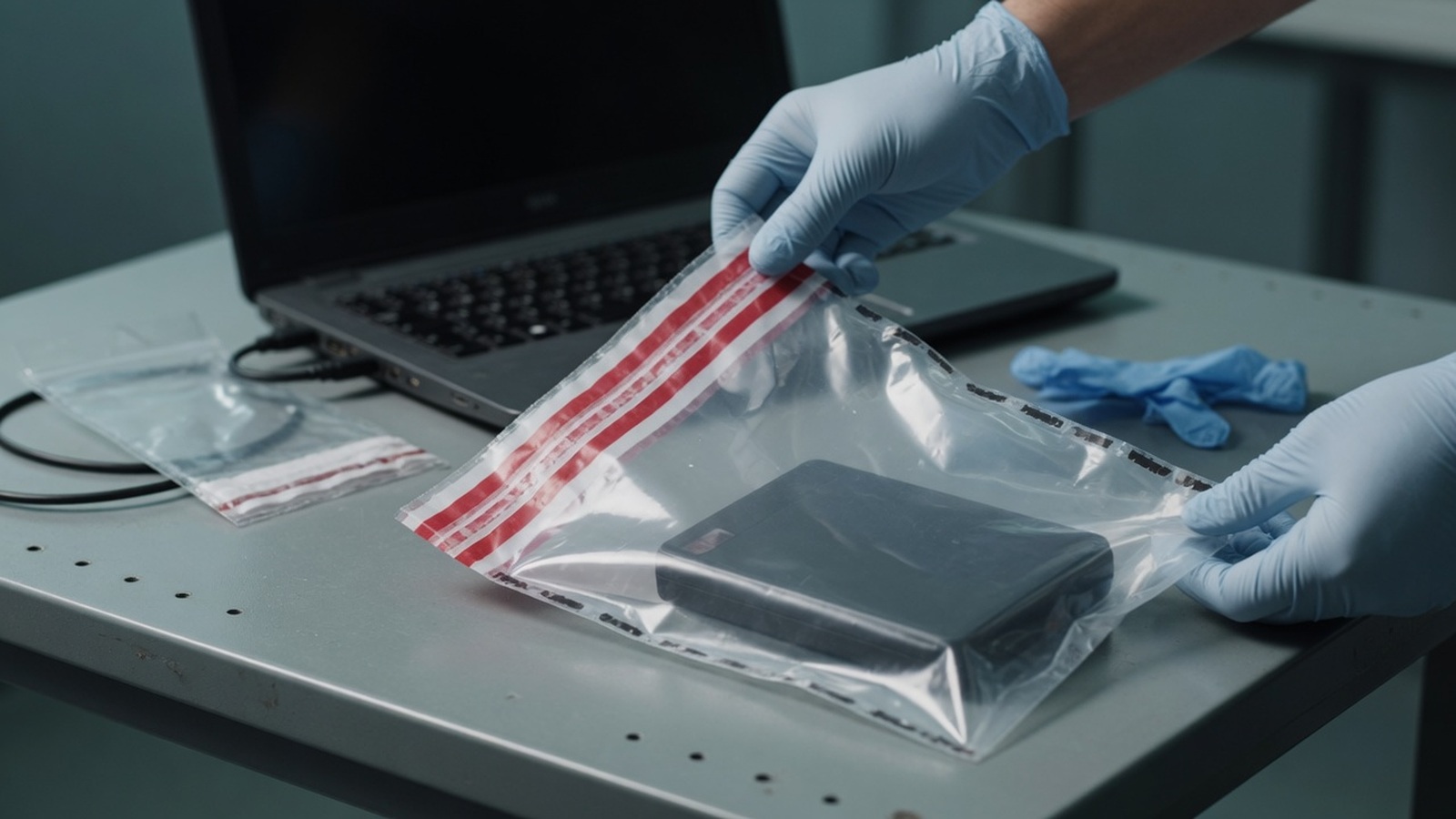
A useful chain of custody record identifies the evidence item, source system or device, collection date and time, collector, transfer history, storage location, hash values where available, and any changes in condition. The record should be specific enough for counsel to trace the item from collection through analysis, production, and testimony without relying on memory or unsupported assumptions.
Hash values help show that a collected file, image, export, or working copy has not changed between checkpoints. They do not answer every authenticity or admissibility question, but they provide a repeatable technical control for comparing the evidence reviewed later with the evidence collected earlier.
Common weak points include undocumented transfers, unclear source identity, missing collection notes, reused devices before preservation, untracked exports, unavailable logs, and reports that do not distinguish originals from copies or transformed review files. A report should describe those gaps plainly instead of hiding them.
Screenshots may help explain what a viewer saw, but they usually do not preserve metadata, source context, account history, collection method, or verification records. When timing or authenticity matters, counsel should preserve native sources, exports, logs, device artifacts, and collection notes where proportional and authorized.
Early involvement helps preserve devices, accounts, cloud records, logs, and metadata before routine use or retention limits change the record. The examiner can help define a proportional collection scope, document transfers, record verification steps, and explain limitations while leaving legal conclusions to counsel.
If potentially relevant devices, cloud records, email, messages, documents, or account logs need review, the first step is to preserve likely sources before routine use changes them. Forensic Discovery can help counsel scope the collection, document the process, and explain findings in a way that separates technical evidence from legal conclusions.
Forensic Discovery can work under counsel direction to preserve source evidence and perform chain of custody for digital evidence-specific analysis while separating technical findings from legal conclusions.
This article is general information about digital forensics and eDiscovery. It is not legal advice and does not create an expert engagement. Findings depend on source condition, available records, collection scope, and counsel’s instructions.
Forensic Discovery is a digital forensics and eDiscovery firm serving U.S. law firms, in-house counsel, HR departments, and corporate IT teams since 2019. Our examiners hold CFCE and CCE certifications and follow documented methods designed to support FRCP and FRE evidence workflows. We work under counsel direction to examine digital evidence, document findings, and provide expert testimony when matters proceed to trial.
Digital evidence has limits. Solid-state drives, cloud retention policies, endpoint cleanup, application updates, overwritten file space, incomplete account access, and normal business processes can all affect what remains. Even when artifacts survive, they may show that an event occurred without proving why it occurred.
That is why the most useful forensic work is conservative. The examiner should document source condition, tool output, corroborating artifacts, and alternate explanations. If a finding depends on a device clock, a cloud log retention window, a backup date, or an unavailable source, the report should make that dependency clear.
The same caution applies to negative findings. If the available records do not show access, deletion, export, or transfer, that result may be important, but it still depends on which sources were preserved and how long each system kept logs. Strong reporting explains both the evidence that supports a finding and the evidence that would have been needed to test competing explanations.
To schedule a free computer forensics consultation for your law firm or business, contact Forensic Discovery online or call us at (866) 458-4993. Our certified computer forensics experts have helped thousands of clients throughout the country retrieve and preserve digital evidence from our offices in Arizona, California, Colorado, and Texas.
"*" indicates required fields

